Nik Stanbridge
Analogue photography and printmaking
It was actually in the autumn and it was (only) my second time, the first having been last year, when Grayson Perry was the lead curator. In case you don’t know, it’s a publicly accessible, open submission show of art of any sort held at the Royal Academy in London. It’s been running for hundreds of years.
I tend to seek out photography even though there is generally relatively little. Even less so monochrome. Or so I thought.
Before the show I’d become more aware, mostly through articles, of ‘alternative photographic processes’ (such a bland and general term given that it doesn’t declare what they are an alternative to) that are 100% focussed on printing physical images. So ‘alternative’ is all about printing… something I’m passionate about (you can read what I think here) – in a nutshell, physical copies are everything as nobody spends any time appreciating photographs online/digitally. What, specifically had I become aware of? Well, Cyanotypes mostly. Relatively simple to do, even without a negative. But not something I’d ever done (or considered doing). My loss I think. Despite my chemistry background.
Anyway, back to photography at the RA and the apparent lack of it.
What struck me at the 2021 show was how many of the photographs on show were not giclee/c-type prints, but polymer photogravure. I had to look up what this was as I’d never heard of it. Turns put that photopolymer gravure (the terms are used interchangeably) is an intaglio, inked plate, printing process. Essentially, a UV sensitive plate is contact printed with an acetate positive, etched out in water, and then inked/printed on to typically heavy cotton rag paper. The key feature of this process being that the resulting print/image has a full range of tonality, like a silver gelatin/digital print, but offers an archival permanence only dependant on the longevity of the paper substrate. It’s attractive due to the physical craft of it all.
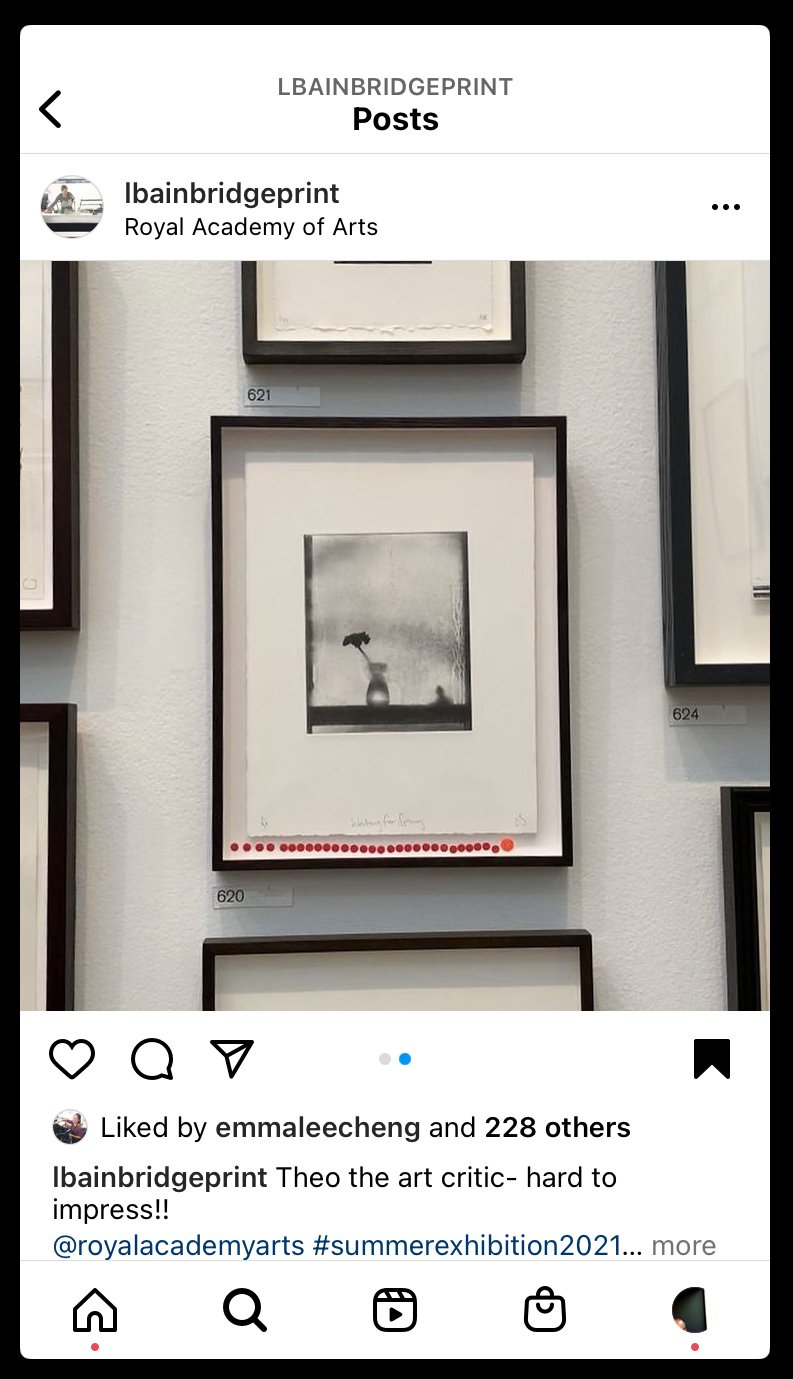
I was instantly hooked on the subtle beauty of the prints and the physical hand-on-ness of it all. And the fact that the process is rooted in processes from the 19/20th C.